
Knoxville based Real Estate Finance Group is now offering DSCR loans.
Definition
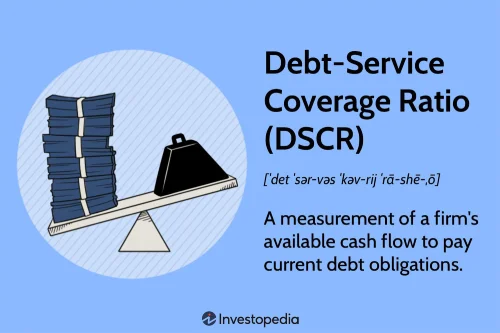
The debt-service coverage ratio (DSCR) is a way to measure how much cash flow a company has available to cover its short-term debt payments.
What Is the Debt-Service Coverage Ratio (DSCR)?
The DSCR shows whether a business’s cash flow is sufficient to meet its current debt obligations. It’s often used by lenders and investors to gauge if a company generates enough income to handle its debt.
The formula is:
DSCR = Net Operating Income ÷ Debt Service (where debt service includes both principal and interest).
Key Points
* DSCR compares a company’s cash flow to its debt payments.
* Lenders use it to assess if a business can repay its loans.
* It’s calculated by dividing net operating income by total debt service.
Understanding the Debt-Service Coverage Ratio (DSCR)
The DSCR is a common measure of a company’s financial stability, especially for businesses carrying large amounts of debt. “Debt service” refers to the cash needed to cover the principal and interest payments on a loan over a specific period.
This ratio compares a company’s total debt commitments to its operating income. Because of its importance, lenders, investors, and business partners often focus on DSCR figures, and loan agreements frequently set DSCR requirements or minimum thresholds.
How to Calculate DSCR
To determine DSCR, you need the company’s net operating income and its total debt service. Net operating income is calculated as revenue minus certain operating expenses (excluding taxes and interest). This figure is generally considered equivalent to earnings before interest and taxes (EBIT).
DSCR=
Total Debt Service
Net Operating Income
Where:
Net Operating Income=Revenue−COE
COE=Certain operating expenses
Total Debt Service=Current debt obligations
Total Debt Service
Total debt service includes all debt payments due within the next year—this covers interest, principal, sinking fund requirements, and lease obligations. It accounts for both short-term debt and the portion of long-term debt that is due in the current year, as shown on the balance sheet.
When calculating DSCR, income taxes can make things tricky. That’s because interest payments are tax-deductible, but principal repayments are not. A more precise method for determining total debt service is:
TDS = (Interest × (1 − Tax Rate)) + Principal
Where:
TDS = Total Debt Service
Lender Considerations
The DSCR measures whether a company’s income is sufficient to meet its debt obligations. It gives lenders insight into the strength of a company’s cash flow and its likelihood of qualifying for financing. Because of this, lenders regularly review a borrower’s DSCR.
A DSCR of 1.00 means the company generates just enough operating income to cover its debt payments. Anything below 1.00 indicates negative cash flow—meaning the business cannot fully cover its debt without additional funding. For example, a DSCR of 0.95 means the company can pay only 95% of its annual debt service from operating income.
If a company’s DSCR is too close to 1.00, it may be considered risky, since even a small drop in cash flow could make it unable to pay its debts. To manage this risk, lenders often require borrowers to keep their DSCR above a set minimum for the life of the loan.
Important
While there’s no universal benchmark, a DSCR of 2.00 or higher is generally considered excellent, showing the company earns twice the amount needed to cover its debt. Many lenders, however, set minimum DSCR requirements between 1.20 and 1.25.
Interest Coverage Ratio vs. DSCR
The interest coverage ratio measures how many times a company’s operating profit can cover its interest payments over a specific period—usually calculated yearly.
It’s determined by dividing EBIT (earnings before interest and taxes) by total interest payments for the same period. EBIT—also called net operating income or operating profit—is calculated by subtracting costs like rent, cost of goods, freight, wages, and utilities from revenue.
A higher interest coverage ratio signals greater financial stability. However, this ratio only measures the ability to pay interest—it does not include principal repayments.
By contrast, the debt-service coverage ratio evaluates whether a company can meet both its interest and principal obligations (including sinking fund requirements). For DSCR, EBIT is divided by the sum of principal and interest payments for the period. Because it accounts for principal as well as interest, the DSCR provides a fuller picture of a company’s financial strength.
Advantages and Disadvantages of DSCR
The debt-service coverage ratio is a widely used tool in loan negotiations, but it has both strengths and weaknesses.
Advantages
When calculated consistently over time, the DSCR can reveal trends in a company’s financial condition. Tracking it monthly can help forecast future ratios, and a drop in DSCR may warn of weakening financial health. It’s also useful for budgeting and strategic planning.
The ratio allows for comparisons between companies. By reviewing competitors’ DSCR figures, management can assess its own performance and see how effectively others use debt to fuel growth.
DSCR offers a broader, more conservative view of a company’s long-term financial stability compared to the interest coverage ratio.
Because DSCR is typically calculated on a rolling 12-month basis, it often reflects ongoing operations more accurately than other financial ratios, which are usually based on a single point in time.
Disadvantages
The DSCR can be calculated using net operating income, EBIT, or EBITDA, depending on what the lender specifies. However, these measures may overstate a company’s income because they exclude certain expenses, and none of them factor in taxes.
Another drawback is that DSCR partly relies on accrual accounting standards. While debt payments require actual cash outflows, DSCR calculations are often tied to GAAP-based financial statements, which don’t always align perfectly with loan agreements that set fixed cash payment schedules.
Benefits can be computed over time to gain a deeper understanding of a business’s financial trajectory.
* It could be used to compare how well different companies operate.
* Compared to other financial ratios, it incorporates more financial categories (principal repayments, for example).
* Given that it is frequently determined on a rolling annual basis, it could provide a more thorough examination of a company’s financial health.
Drawbacks
* may not accurately reflect a company’s financial situation because certain costs, like taxes, might be left out.
* heavily depends on accounting rules, which can differ significantly from when cash needs actually occur.
* Possibly regarded as a more intricate formula in contrast to other financial ratios
* does not receive uniform treatment or requirements from different lenders.
DSCR examples
Suppose a local bank offers a mortgage loan to a real estate developer. Given that the developer’s rental properties bring in money, the lender will want to compute the DSCR to assess the developer’s capacity to borrow and repay the loan.
The lender observes that debt service will be $350,000 annually, while the developer reports that its net operating income will be $2,150,000 annually. 6.14× is the calculated DSCR. With their operating income, the borrower can pay off their debt more than six times over.
An Illustration of Lender Terms
The debt requirements for new mortgages were described by MK Lending Corp (2025 version). Investors with a DSCR of at least 1.00 are indicated by the yellow-highlighted columns. Investors with a DSCR of less than 1.00 are shown in the bottom rows. Compared to investors with DSCRs below 1.1, the top row investors have better loan terms and LTV/CLTV terms because they are less risky.
An illustration of a loan agreement
Sun Country Inc. signed a contract with the Bank of New York Mellon and the U.S. Department of the Treasury. As part of the loan and guarantee agreement, Sun Country consented to a number of financial covenants.
In the event that Sun Country’s DSCR drops below a predetermined threshold, specific trigger events will happen. To safeguard the lenders in the event of triggers, specific stopgaps will be implemented. If Sun Country’s DSCR falls below 1.00 for a predetermined period of time, the lenders will get 50% of certain revenues. 2. “Loan and Guarantee Agreement,” U.S. Department of the Treasury.
How is the Debt-Service Coverage Ratio (DSCR) determined?
Net operating income is divided by total debt service, which comprises loan principal and interest payments, to determine the DSCR. If a company has $100,000 in net operating income and $60,000 in total debt service, its DSCR would be about 1.67.
What Makes the DSCR Crucial?
A frequently used metric in loan contract negotiations between banks and businesses is the DSCR. When a company applies for a line of credit, it might have to make sure that its DSCR stays above 1.25. If it does, the borrower may fall behind on the loan. In addition to helping banks manage their risks, DSCRs can assist analysts and investors in evaluating a company’s financial health.
A Good DSCR: What Is It?
The industry, the company’s rivals, and its growth all affect a good DSCR. DSCR expectations may be lower for a smaller business that is just starting to make money than for a more established, mature business. On the other hand, a DSCR greater than 1.25 is generally regarded as strong. Ratios less than one might suggest that the business is having financial issues.
The Bottom Line
A popular financial ratio that contrasts a company’s operating income with its debt payments is the DSCR. The ratio can be used to determine if a business makes enough money to cover its principal and interest payments. Lenders and other external parties frequently use the DSCR to reduce risk in loan terms.
The DSCR in corporate finance represents the cash flow available for sinking fund contributions as well as yearly debt payments.
It helps loan officers assess a borrower’s ability to repay debt in personal finance. With typical minimums of 1.25, it assesses whether a property’s cash flow can support its debt in the context of commercial real estate.
The DSCR has different uses in different situations.
It evaluates borrowing capacity in personal finance and cash flow for debt obligations in corporate settings. It’s a crucial sign of a property’s viability in the real estate market. Banks frequently demanded a DSCR of at least 1.2 in the late 1990s and early 2000s [citation needed], though some were willing to accept lower ratios; this practice was connected to the 2008 financial crisis. Adequate cash flow is indicated by a DSCR above 1, whereas a DSCR below 1 suggests a possible shortfall. A Debt Service Reserve Account (DSRA) in project finance can be used to offset times when the DSCR is less than 1.
Although Real Estate Finance Group is based in Knoxville, we do loans all across the state of Tennessee. If you’d like more information Click Here to Contact Us, or Click Here to Call 865.584.1584.